How USD movement affects gold prices
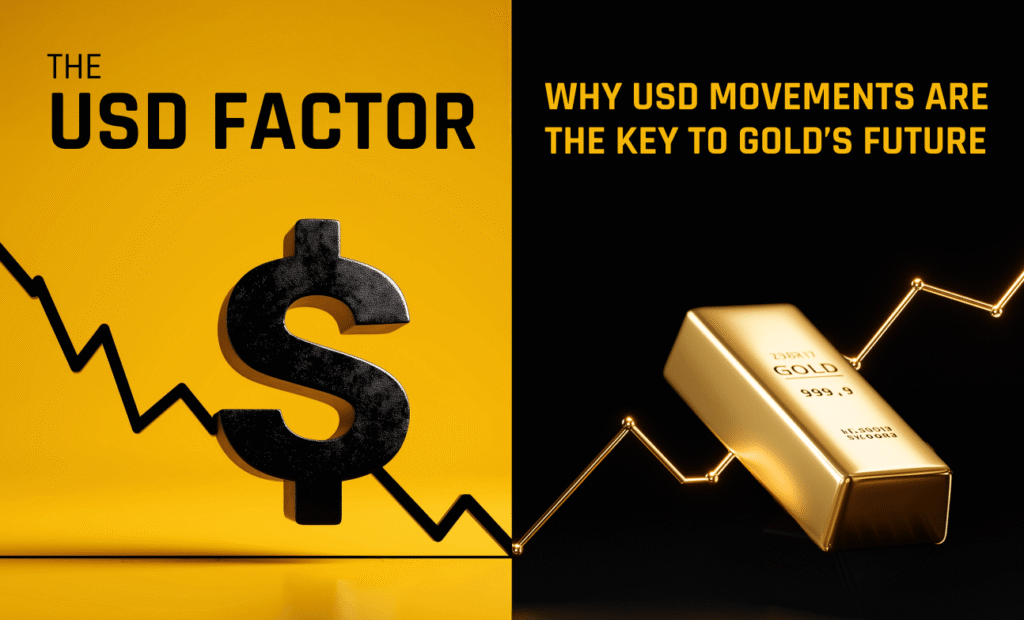
Gold and the US Dollar (USD) share one of the most important relationships in global financial markets. Whether you are a gold trader, bullion dealer, jeweller, investor, or someone interested in commodity markets, understanding how USD movements affect gold prices can help you better interpret market trends and make informed decisions. Since gold is primarily priced in US Dollars across international markets, changes in the value of the USD often influence gold prices worldwide. Understanding the USD-Gold Relationship In general, gold and the US Dollar tend to have an inverse relationship. This relationship exists because gold is traded globally in US Dollars. A change in the dollar’s value affects how affordable or expensive gold becomes for buyers around the world. Why a Strong USD Can Pressure Gold Prices When the US Dollar appreciates against other currencies: 1. Gold Becomes More Expensive Internationally Since gold is priced in USD, buyers using other currencies must pay more to purchase the same amount of gold. For example: International buyers may face higher costs, reducing demand for gold. Lower demand can put downward pressure on gold prices. 2. Investors Prefer Dollar-Based Assets A stronger USD often reflects confidence in the US economy. During such periods, investors may allocate funds toward: As money moves into these assets, demand for gold may decrease. 3. Higher Interest Rate Expectations A stronger USD is frequently associated with rising US interest rates. Gold does not generate: When interest-bearing investments become more attractive, investors may shift funds away from gold. Why a Weak USD Often Supports Gold Prices When the US Dollar weakens: 1. Gold Becomes More Affordable A weaker dollar makes gold cheaper for buyers holding other currencies. This often increases global demand for gold. Higher demand can contribute to rising gold prices. 2. Gold as a Currency Hedge Many investors view gold as a store of value. When confidence in the dollar declines, investors often turn to gold as a hedge against: This additional demand can push gold prices higher. 3. Increased Investment Demand Weakness in the USD can encourage investors to diversify into alternative assets. Gold frequently benefits from this shift because of its reputation as a safe-haven asset. The Role of the US Federal Reserve The US Federal Reserve (Fed) plays a major role in influencing both the USD and gold prices. When the Fed Raises Interest Rates When the Fed Cuts Interest Rates Because of this relationship, gold traders closely monitor Federal Reserve meetings, policy statements, and economic data releases. Real-World Example Imagine that strong US economic data leads investors to expect higher interest rates. As a result: Conversely, if economic uncertainty weakens the USD: Does Gold Always Move Opposite to the USD? Not always. Although the inverse relationship is common, there are periods when both gold and the USD rise together. This can happen during: In such situations, investors may seek both the safety of the US Dollar and the protection of gold. Therefore, USD movement is an important factor, but it is not the only factor affecting gold prices. Other Factors That Influence Gold Prices In addition to USD movements, gold prices are affected by: A complete gold market analysis should consider all these factors together. Conclusion The US Dollar is one of the most influential drivers of global gold prices. Generally, a stronger USD tends to create downward pressure on gold, while a weaker USD often supports higher gold prices. However, market conditions, interest rates, inflation expectations, and investor sentiment can sometimes alter this relationship. For bullion businesses, gold traders, and market learners, understanding the connection between the USD and gold is an essential step toward developing a broader understanding of precious metal markets and price risk management. Disclaimer: This article is intended for educational and informational purposes only and should not be considered investment, financial, or trading advice. Trading and investing in gold and financial markets involve risk, and past market behavior does not guarantee future results.